
We show you every step
*Transparent care, from beginning to end*
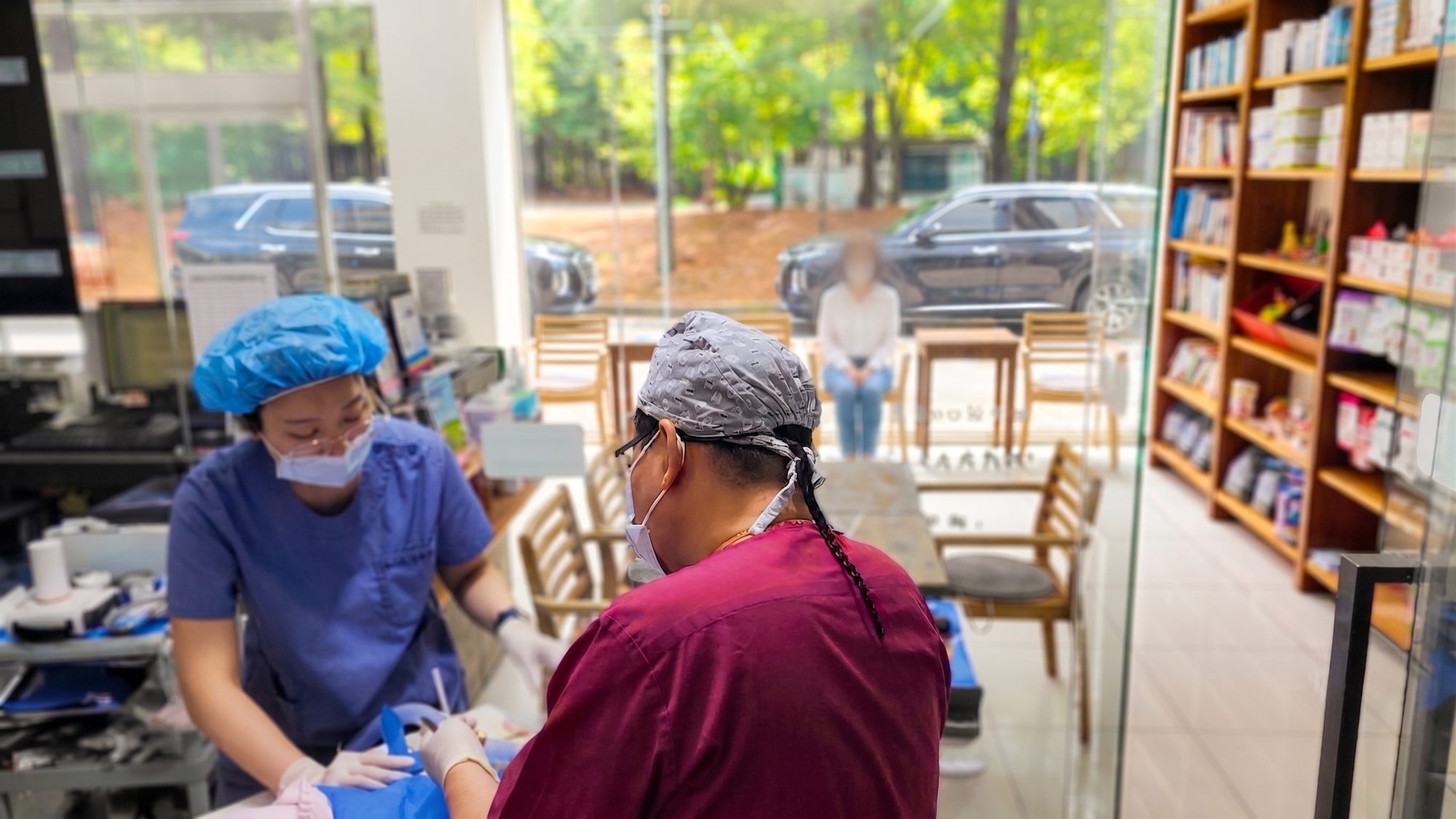
From anaesthesia to recovery, you can observe every stage of your pet’s treatment. We do not simply explain what happened afterwards with photographs — we let you see the care as it happens.
“I have no way of knowing what
happens to my pet under anaesthesia”
Two concerns make pet owners hesitate most when considering dental treatment.
We do not address those concerns with reassurance alone. We let you see for yourself.
Anxiety about anaesthesia
From the moment the treatment room door closes, all an owner can do is wait. That is why many hospitals tell you “we anaesthetise safely”. We let you confirm it with your own eyes, from the moment your pet falls asleep to the moment it wakes. Being told and seeing are not the same thing.
Concerns about unnecessary treatment
“Several teeth were extracted — but were they all necessary?” At Doctors Animal Hospital, you do not have to wonder. During the procedure, we invite you in, show you the affected teeth directly, explain the findings using the radiographs, and proceed only after discussing the treatment with you.

Watching is not something you apply for — it is how we work
The viewing area is the waiting room. There is nothing to apply for. The glass works both ways, so our team can see you too and call you in at the moment it matters.
- Watch every stage — induction, examination, radiographs, the procedure, recovery
- We call you in during the procedure so you can see the affected tooth yourself while we explain
- Photographs are welcome (we kindly ask that you do not record video)
- If it is hard to watch, you may step away at any time — we never insist
- You may stay beside your pet in the recovery room for the 30 minutes it takes to wake
We apply the standards of human dentistry
to veterinary dental care
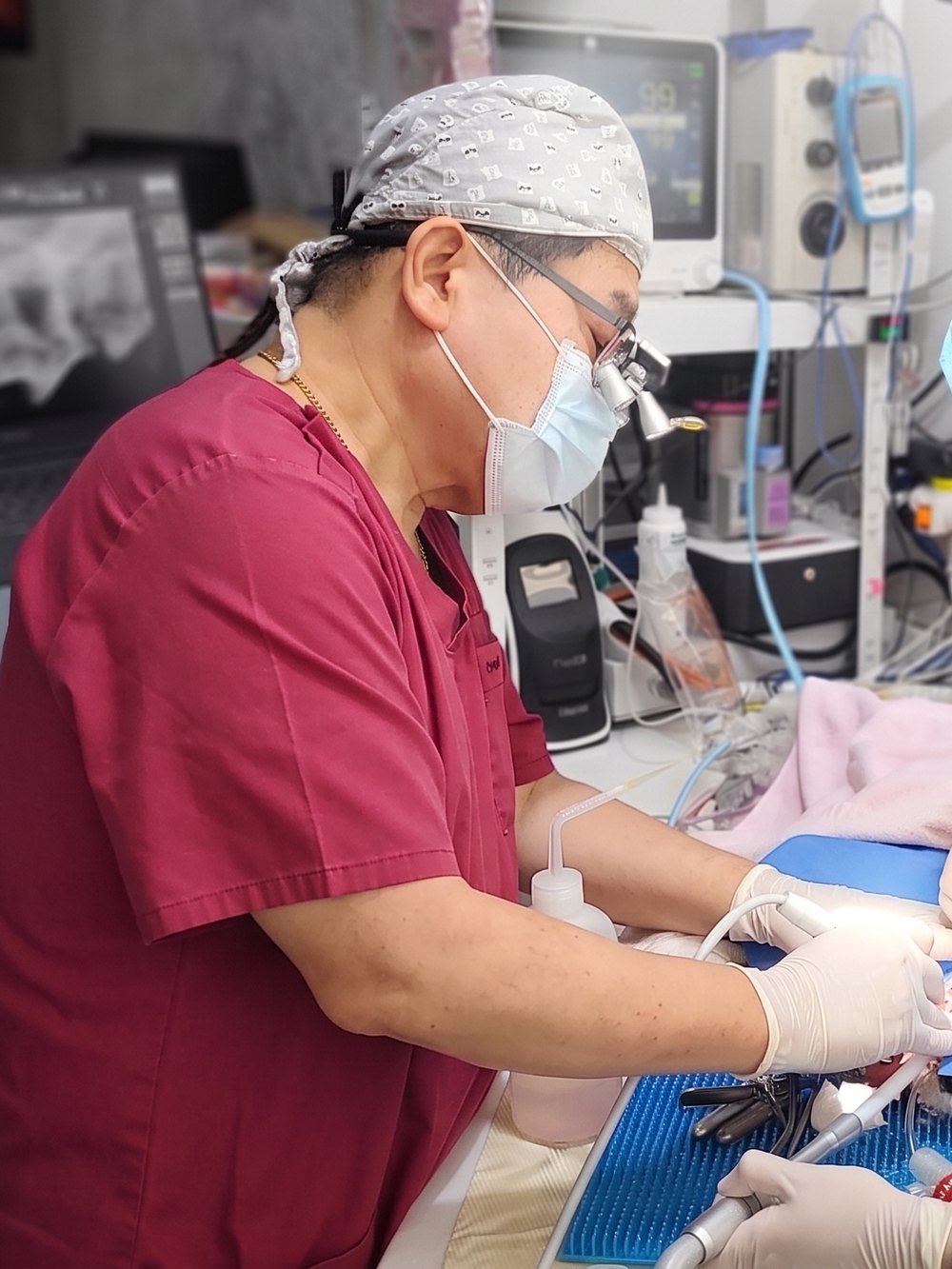
Dr. Kim Gu-cheol is both a veterinarian and a dentist. He graduated from the College of Veterinary Medicine at Kyungpook National University and trained in veterinary surgery at the University of Tokyo. He later earned a Bachelor of Dental Surgery from James Cook University in Australia, obtained Australian dental registration, and treated human patients in public hospitals, university clinics and private dental practices in Australia. After leading the dental centres at Busan and Daegu Animal Medical Centers, he has served as dental director at Doctors Animal Hospital in Cheonan since 2021.
What matters is not simply holding two licences. Dual training changes how dental problems are assessed and treated. Root canal treatment, crowns, composite restorations and radiographic interpretation — procedures used every day in human dentistry — are adapted to the anatomy of each animal’s mouth.
Oral conditions we treat
Bad breath, dropping food while eating, chewing on one side only, facial swelling — by the time an owner notices, the disease has usually progressed a long way. Here is what we check for each sign.
The most common condition, yet one that is often detected late. What matters is not the visible calculus, but how much bone has been lost beneath the gumline.
A broken tooth · reluctance to chew Tooth fractureA tooth with exposed pulp hurts a great deal. It can often be saved with root canal treatment and a crown rather than extracted.
Fracture · exposed pulp · discoloured tooth Root canal treatment · crownsWe clear the damaged pulp, fill the canal, and fit a crown. The same principle as root canal treatment in people.
Drooling · spitting food out Feline tooth resorptionA painful condition in which dental hard tissue is progressively resorbed. Dental radiographs are essential for assessing the roots and determining the appropriate treatment.
Swelling below the eye · a facial wound or draining tract Periapical (tooth root) abscessThis can easily be mistaken for a skin problem. Because the underlying cause is infection around the tooth root, it is likely to recur unless the affected tooth is treated.
Teeth that cannot be saved Extraction · oral surgeryLeaving a tooth that cannot be saved means leaving the pain in place. We show you on the radiograph why it cannot be saved, and decide together.
We do not show you only the result
Before treatment · full-mouth radiographs · before and after for each numbered tooth · after treatment. Every photograph is compiled and given to you. Alongside the dental work we share the pre-anaesthetic test results and everything else you would not want to miss about your pet.
 Korean domestic shorthair, 23 yearsThe oldest patient we have treated · extraction
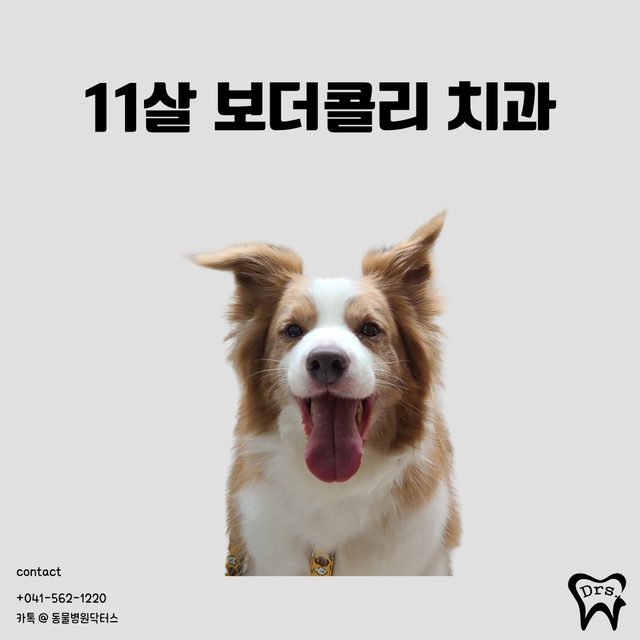 Border Collie, 11 yearsFractured molars on both sides · root canal + crown
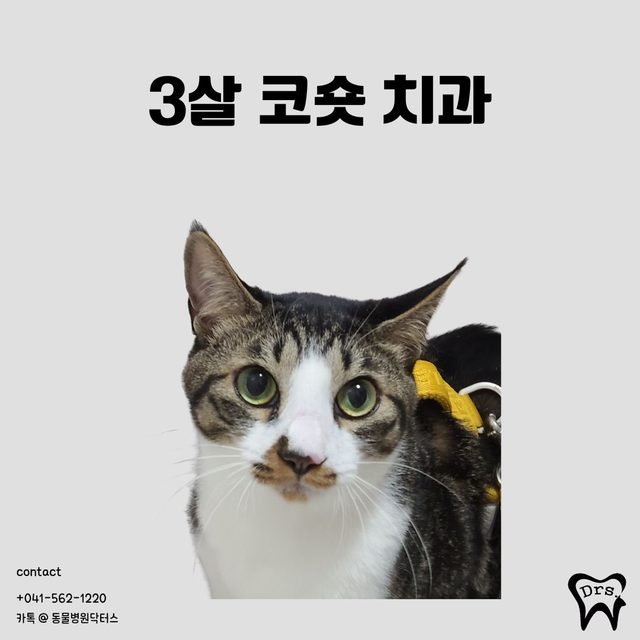 Korean domestic shorthair, 3 yearsFractured canine · root canal + crown
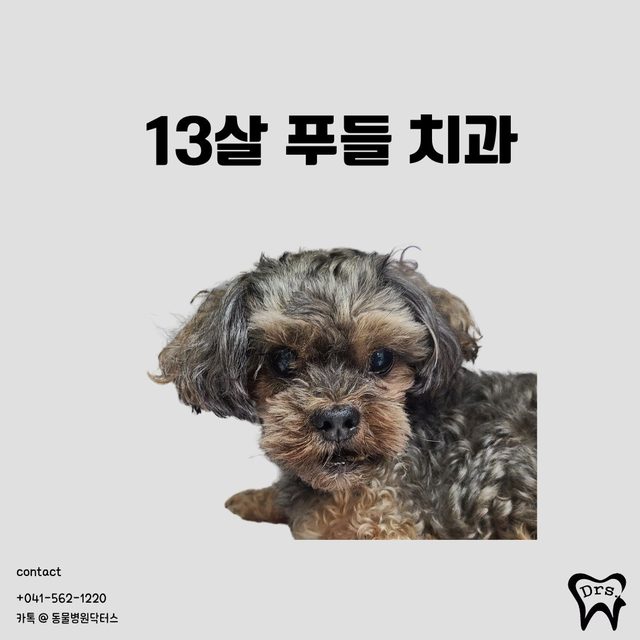 Poodle, 13 yearsSevere periodontitis · full-mouth extraction
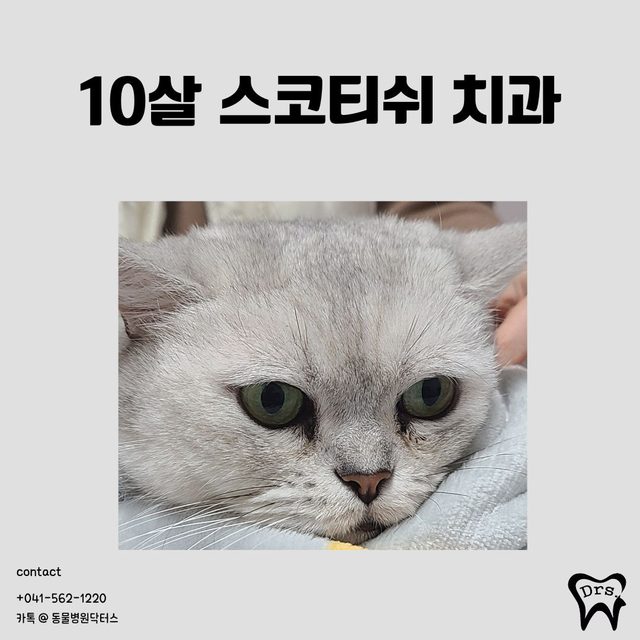 Scottish Fold, 10 yearsTooth resorption (FORL) · extraction
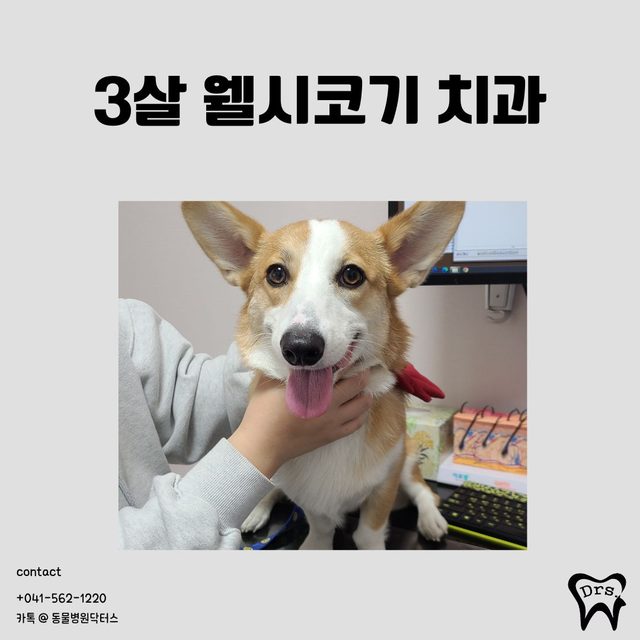 Welsh Corgi, 3 yearsTwo-year follow-up after root canal treatment · progress reviewed
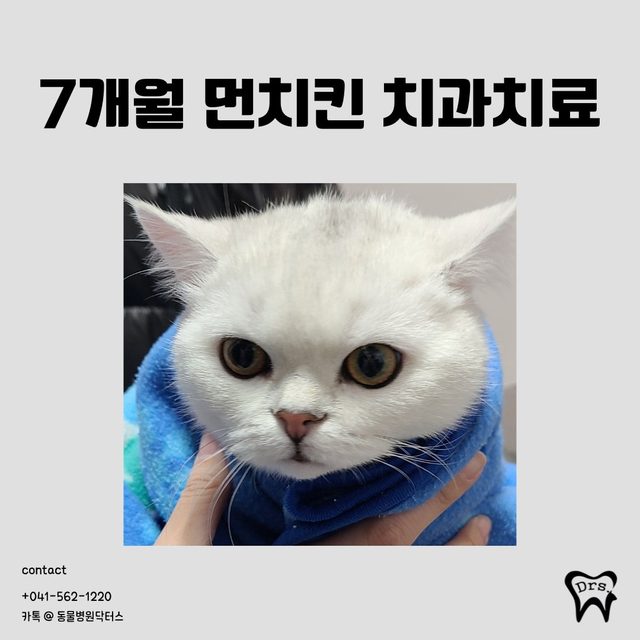 Munchkin, 7 monthsFractured canine · partial pulpectomy
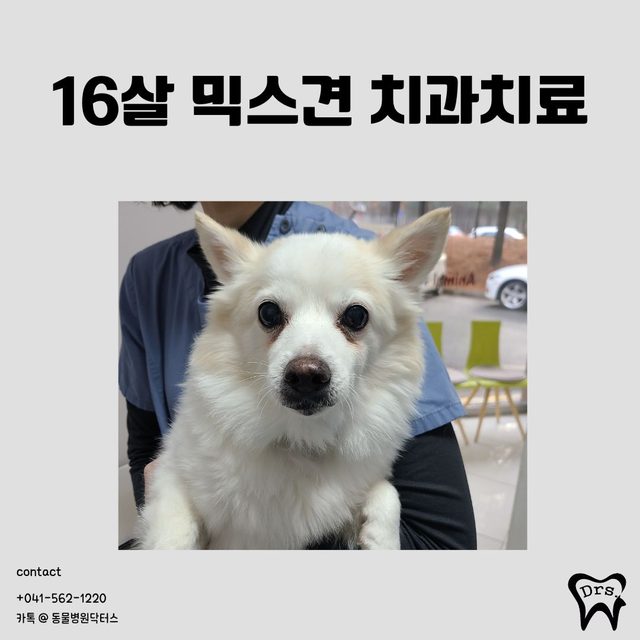 Mixed breed, 16 yearsExtractions for periodontitis · gingival flap surgery
A four-hour round trip to Seoul —
is it really necessary?
Many veterinary dental clinics are concentrated in the greater Seoul area. A two-hour drive home immediately after anaesthesia can be tiring for both your pet and you, especially if your pet is older.
Cheonan is about an hour’s drive from Asan, Sejong, Daejeon, Cheongju and Pyeongtaek. At Doctors Animal Hospital, dental care is provided by Dr. Kim Gu-cheol, who is both a veterinarian and a dentist.
Main telephone 041-562-1220 · Get directions on Naver Map

Precise assessment, attentive monitoring to the end
The accuracy of dental care depends on thorough assessment and attentive monitoring. Full-mouth dental radiographs and a detailed oral examination are standard at Doctors Animal Hospital.
Full-mouth dental radiography
We check the bone beneath the gum and the tooth roots. We do not judge by visible calculus alone.
Biolase Waterlase iPlus
A dental laser that works with water. Used for soft-tissue procedures such as gum surgery.
Medit i700 intraoral scanner
Scans the mouth in 3D. Used for crown fabrication and treatment records.
GE B125M patient monitor
Tracks ECG, oxygen saturation, end-tidal CO₂, blood pressure and temperature in real time throughout anaesthesia.
Dental care is by appointment only
We do not fit dental procedures between general consultations. We reserve dedicated time for dentistry, and Dr. Kim personally oversees every stage. This is why an appointment is required.
Opening hours
- Weekdays
- 09:30 – 18:30
- Saturday
- 09:30 – 17:00
- Lunch break
- 12:00 – 13:00
- Closed
- Sundays · public holidays
Dental care closed on Mondays
Two dental anaesthesia slots
- Morning
- 09:30
- Afternoon
- 14:00
- Fasting
- Fast for at least 6 hours before treatment
Water is allowed
Dental consultations are scheduled around booked surgery times. Please call us.
Deposit
- Consultation only
- No deposit
- Consultation + treatment
- KRW 100,000 (deducted from the treatment fee)
- Bank account
- Korea Post 313072-0204-0121 (account holder: Doctors Animal Hospital)
If the depositor's name differs from the owner's name we cannot match the payment. Please let us know.